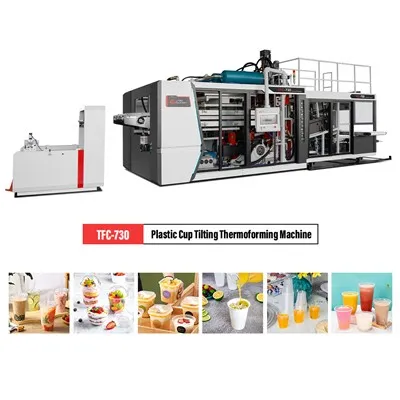
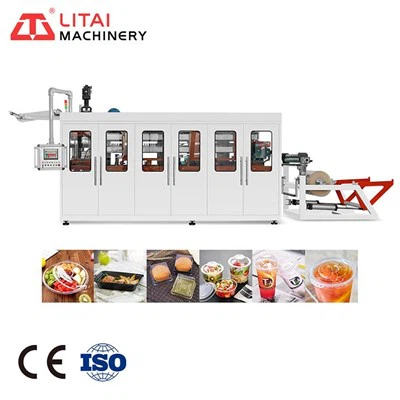
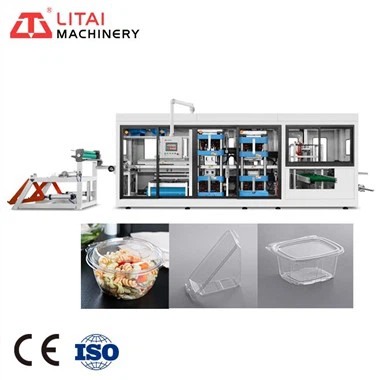
In the manufacturing industry, the cup thermoforming machine plays an indispensable role, especially in plastic processing. With the development of science and technology, people have higher and higher requirements for the quality of cup forming, and thermoforming technology has gradually become an indispensable technical means. This equipment is widely used to manufacture plastic cups of various shapes and sizes. Whether it is a daily drinking cup or a disposable coffee cup, it is inseparable from the strong support of thermoforming technology. At present, most of the thermoforming products sold on the market are manually operated, which greatly affects the work efficiency and quality. Therefore, it is necessary to develop a new and efficient automatic production line to replace the traditional manual operation method. In-depth study of the operating mechanism of the cup thermoforming machine can not only help us better master the core elements of this technology, but also provide solid theoretical support for improving production processes and improving product quality.
How does the heating system of the cup thermoforming machine work?
The heating system on which the cup thermoforming machine relies constitutes the core of its operation. The heating element is a device used to melt the thermoplastic material into a certain shape and then cool it to room temperature. This system is mainly composed of heating components and temperature control systems. Among them, heating elements are generally divided into several types such as resistive, capacitive, inductive and thermal paper. Different types of heating elements have their own unique performance characteristics. Thermal elements usually use resistance wires or electric heating tubes to preheat thermoplastic materials using the heat generated by electric current. At present, the electric heating devices commonly used at home and abroad generally divide the heated object into several areas and heat them separately. The main responsibility of the temperature control system is to monitor and adjust the temperature of the heating element to ensure that the material can reach the appropriate molding temperature during the preheating stage. In order to ensure that the temperature distribution of the material is more uniform during the heating process, the heating system usually chooses a zone heating strategy.
How are thermoplastic materials formed into cups during the thermoforming process of cups?
After the thermoplastic material is heated to the appropriate temperature, its physical properties will change from solid to viscous flow. At this time, a certain amount of pressure and shear force need to be applied to the plastic melt to make it flow and form the desired shape. In this case, the material exhibits good flow characteristics and can be formed under the guidance of the mold. Therefore, when producing and processing cups, it is necessary to detect the surface and internal conditions of the product to ensure product quality. When thermoforming a cup, the mold generally has a cavity that matches the shape of the cup. Due to the structural characteristics and usage requirements of the cup body, the mold needs to be installed in the corresponding position. Under the guidance of the mold, the material undergoes multiple steps such as stretching and blowing, and is finally completely filled into the cavity and solidified into a cup. When the cup is thermoformed, the material is in a flowing state. In the molding process, the flow characteristics of the material are regarded as one of the core elements, which directly affects whether the cup can be successfully filled and meet the predetermined shape and size.
What is the role of the cooling system in the thermoforming machine of the cup, and how does it work?
In the thermoforming process of the cup, the role of the cooling system is also indispensable. In the thermoforming process of the cup, the cooling device plays a very important role. Its core function is to quickly reduce the temperature of the molded product and help the material solidify faster. If the cooling system is improperly designed, it will seriously affect the quality and efficiency of the product molding, and even make the product scrapped. The cooling system is generally composed of a cooling medium (such as water or air) and a cooling pipe. The cooling medium can be water or other liquids. The cooling medium flows through the surface of the molded product through the cooling pipe, thereby taking away heat and reducing the temperature. Installing cooling water pipes on molded products can prevent the resin from sticking to the mold and improve the surface quality of the product. In order to ensure the high quality of the finished product, the temperature management strategy in the cooling stage is also crucial. Adding cooling medium to the molded product is a common method. By fine-tuning various parameters of the cooling medium, such as flow, temperature and cooling time, we can accurately control the temperature of the molded product.
How does the cup thermoforming machine accurately control the temperature and time during the molding process?
The quality of the molded product is greatly affected by temperature and time. Here we introduce a new cup thermoforming machine temperature and time double closed-loop control system. In order to ensure the stability and controllability of the molding process, cup thermoforming machines usually use advanced temperature control systems and time management strategies. The temperature control system uses sensors to monitor the temperature fluctuations during heating and cooling in real time, and uses the controller to make corresponding adjustments to the heating components and cooling medium. Due to the complex structure and small size of the cup body, it is necessary to select appropriate temperature control methods and time control strategies according to different types of cups. The time management strategy covers key parameters such as setting the molding cycle and time allocation for each stage. Through precise control of temperature and time, we can ensure that the material reaches the most ideal state during the manufacturing process, and then produce high-quality cups.
What key role does the design and use of the mold play in the molding process of the cup thermoforming machine?
In the thermoforming process of the cup, the mold plays a vital role. This article introduces the types of molds and analyzes the main contents and methods of mold structure design. Its design scheme directly affects the appearance, scale and surface quality of the finished product. There is a certain relationship between mold structure design and material selection, and they influence each other. The basic principles of mold design cover aspects such as the rationality of the structure and the appropriateness of material selection. At the same time, ensure that the molded parts have a certain degree of accuracy. Through appropriate mold design, it can be ensured that the material can be smoothly filled in the molding stage and finally form a predetermined shape; advanced process methods and equipment must be used during mold processing to ensure that the product meets the technical requirements, and the mold must be properly heat treated. Choosing the right material can enhance the durability of the mold and extend its service life. For plastic parts, surface treatment has an important influence on the life of the mold, especially for some complex products. In addition, proper maintenance and care of the mold is also a key step to ensure the quality of the molded product. Regular cleaning, inspection and maintenance of the mold can help extend its service life and reduce the risk of failure during the production process.
The operating principle of the cup thermoforming machine includes heating, forming, cooling, temperature and time control, and mold design. Its core part is the overall structure composed of the heating system, mold cooling system and control system. The close cooperation of these core components ensures the stability and controllability of the thermoforming process. In addition, the cup thermoforming method has the advantages of low cost, energy saving and high efficiency, and easy large-scale industrial production. With the continuous advancement of science and technology, the future cup thermoforming machine will pay more attention to the development direction of intelligence, automation and environmental protection. Therefore, improving the level of machine manufacturing and reducing production costs are effective ways for enterprises to achieve sustainable development. With the help of advanced sensors, control equipment, automation tools and other technologies, we can further optimize the production process, reduce energy consumption, and reduce the adverse effects on the environment. Based on this, this paper mainly analyzes and discusses the mold material and structural design in the cup thermoforming machine, aiming to improve the quality and output of the product. At the same time, the continuous progress of mold design and material science will also bring new vitality to the development of cup thermoforming machines.