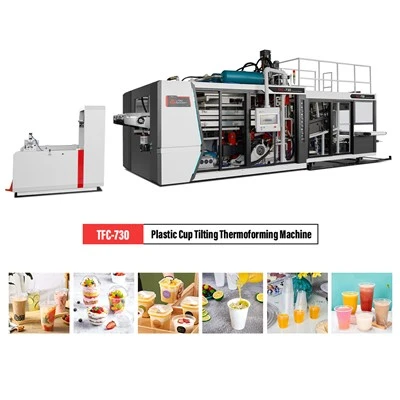
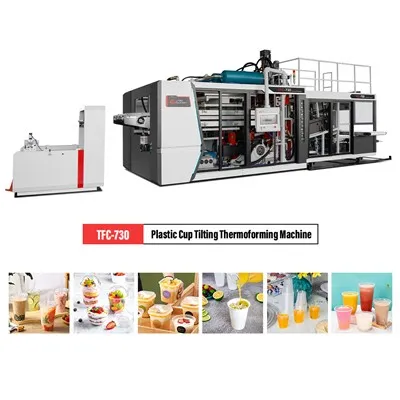
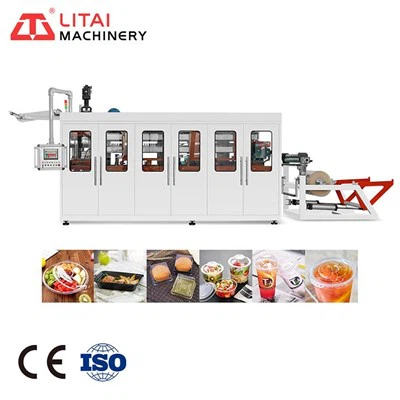
1. Plastic thermoforming machines are roughly divided into three main parts:
1) Electronic control part:
◎ Traditional injection molding machines use contact relays to switch various actions, which often fail due to loose contact screws and aging of contacts. Usually, new products should be replaced after one million uses to ensure the stability of electronic control. In particular, environmental factors such as dust adhesion and air humidity will also affect the machine operation.
◎ Modern injection molding machines use contactless integrated circuits, which greatly reduce the connection of wires, significantly improve the bad phenomena caused by wires, and improve stability.
2) Mechanism part:
◎ The mechanism part should be regularly maintained and lubricated to reduce the friction coefficient and reduce wear. The nuts and locking screws on the head plate should be checked regularly to prevent the coring column from being broken due to uneven force.
◎ The mold thickness adjustment mechanism should regularly check whether the transmission shaft gear or chain is offset or loose. Whether the pressure plate screw on the gear is loose, whether the lubricating grease is sufficient, etc.
3) Hydraulic part:
The hydraulic system should pay attention to the cleanliness of the hydraulic oil to maintain the quality of the hydraulic oil. Stable and high-quality hydraulic oil should be used. In addition to regular replacement, the working temperature should be properly controlled below 50C to avoid affecting the stability of the hydraulic action due to deterioration.
When the injection molding machine is in operation, if there is any abnormality in the system, the controller will sound an alarm, and a line of highlighted warning messages will appear at the bottom of the screen, as shown below
Fault problem analysis and solution
The cause of machine failure is often caused by improper operation and setting. Simple troubleshooting can be done through analysis.
Adjustment of clamping force and low pressure protection
Steps:
1. Set the clamping high pressure to 135bar, 10%; set the low pressure speed to 20%, and the low pressure position to 100mm; set the low pressure time to 5 seconds.
2. Use the mold adjustment to establish the clamping force; the maximum value of the system pressure gauge when the pressure gauge rises at the high pressure of the mold closing shall prevail. You can refer to the clamping force oil pressure comparison table.
3. Set the low pressure position to zero after opening the mold.
4. Press the mold closing button until the molds touch each other and then release it. At this time, the movable mold position is assumed to be "X", and the low pressure position is set to "X+1" mm.
5. Then set the low pressure protection width: the low pressure protection width is the distance from low speed to low pressure.