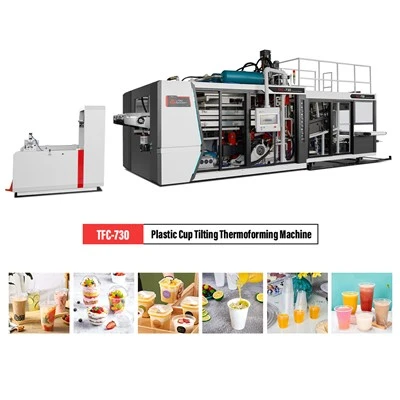
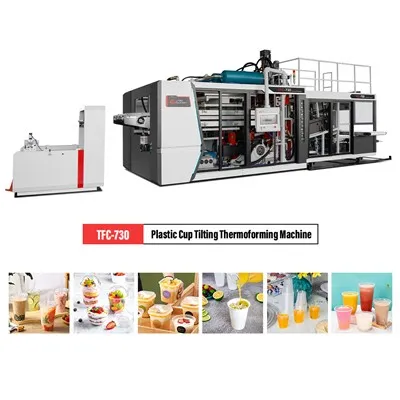
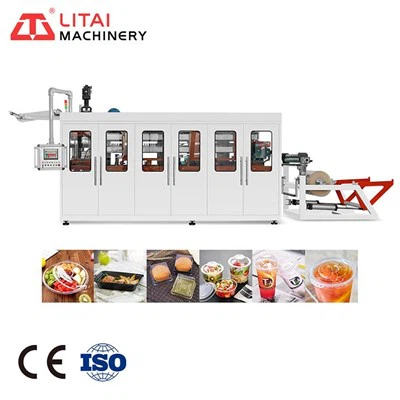
Plastic cups, as an indispensable single-use item in daily life, are produced through highly automated plastic cup manufacturing machine systems. These machines use precise injection molding or thermoforming processes to convert plastic materials into cups of all sizes. In order to ensure the smooth operation of the production line and maximize production, the key is to understand the calculation method of production efficiency and master the key points of equipment maintenance. In this paper, the calculation methods of production efficiency of plastic cup manufacturing machinery is discussed in detail, and the maintenance intervals and main points of plastic cup manufacturing machinery are expounded.
Calculation of Production Efficiency of Plastic Cup Manufacturing Machinery
Production efficiency is an important index to measure machine performance and production management level, which directly affects a company's production costs, delivery cycles and market competitiveness. For plastic cup manufacturing machine setups, productivity calculations typically involve the following key parameters:
1.Theoretical Production Cycle Time
Theoretically, the production cycle time is the time a machine needs to finish one plastic cup making cycle under perfect conditions. This cycle includes injection molding or thermoforming, cooling, disassembly, and robot part removal. The machine maker usually gives this time based on the machine's design performance. This time is then used to find the theoretical productivity.
2.Actual production cycle
Actual production cycle time includes many real factors in the production process. These factors are machine adjustments, raw material changes, equipment breakdowns, and worker skill levels. These things can cause the machine to stop. Actual production cycles are often longer than theoretical ones. So we must consider them when we check productivity.
3.Production Efficiency Calculation Formula
Productivity can be calculated using the following formula:
Production Efficiency= (Theoretical Maximum Production Quantity
Actual Production Quantity
)×100%
Here, the theoretical maximum production quantity is calculated based on the theoretical production cycle time, which represents the number of plastic cups a machine should be producing at a given period (say, eight hours a day). Actual production quantity refers to the number of plastic cups actually produced in the same time period.
In order to calculate production efficiency more accurately, the concept of Overall Equipment Effectiveness can be introduced, which takes into account three factors: equipment availability, performance rate and quality rate.
Availability: Reflects the percentage of time the equipment is actually available during the scheduled run time, including planned and unplanned downtime.
Performance rate: Reflects the ratio of the actual production speed of the equipment to its theoretical maximum production speed in available time, taking into account loss of speed and minor downtime.
Quality ratio: reflects the quantity of products produced as a percentage of total production, including defective products and reworked products.
OEE=Availability×Performance Rate×Quality Rate
The OEE calculations will allow for a more comprehensive assessment of the efficiency of plastic cup manufacturing machinery and identify key factors affecting production efficiency.
Maintenance Intervals and key points of plastic cup manufacturing machinery
Regular maintenance and repair is the key to ensure the efficient operation and extended service life of plastic cup manufacturing machinery. Here are key periods and highlights of maintenance:
1. Daily maintenance
Cleaning: After daily production, clean the machine well. This includes the injection molding or thermoforming unit, molds, cooling systems, and robotic arms. This removes leftover plastic pieces and oil stains.
Lubrication: Oil or grease the sliding parts, bearings, and chains on a regular basis. This helps reduce wear and friction.
Check: Check that the fastener is loose, that the electrical connection is good, and that there is an effective safety device.
2. Weekly maintenance
Mold Inspection: weekly comprehensive inspection of the mold surface wear, cracks, vent slots plugging and so on. Repair or replace molds as necessary.
Hydraulic System Inspection: check the amount and quality of hydraulic oil. Change the hydraulic oil if needed. Clean the hydraulic tanks and filters.
Electrical System Inspection: check if the electrical control cabinet gets too hot, if there is a bad smell, or if the wiring terminals are loose. Tighten or change them if needed.
3. Monthly maintenance
Mechanical Component Inspection: check drive parts, rails, and ball screws well. Adjust the gaps to make movement smooth.
Cooling System Maintenance: clean the water tower, cooling water pipes, and radiator. Check the pump to make sure it runs well and cools properly.
Safety Device Test: test the light curtains, emergency stop buttons, and safety doors on machines. Make sure they work safely and reliably.
4. Quarterly and Annual Overhaul
Quarterly maintenance: Every three months, check the machine fully. This includes the strength of structural parts, the condition of weld seams, and how well the electrical system is insulated. Reinforce or fix things if needed.
Annual overhaul: Once a year, do a full machine overhaul. This means taking apart big parts, cleaning them well, checking them, fixing or changing worn parts, and fully testing and upgrading the electrical system. This keeps the machine working in its best condition.
Key points of maintenance
Mold Maintenance: The mold is the core part of plastic cup making machines. The condition of the mold directly affects product quality and production speed. So mold maintenance is the most important. This includes regular cleaning, polishing, fixing wear and tear, and adjusting clamping force.
Hydraulic System Maintenance: Hydraulic system to power the operation of the machine. Its stability and reliability are important. Periodically check the quantity and quality of hydraulic fluid. Replace old or dirty hydraulic fluid in a timely manner. Clean hydraulic components and piping. Stop leaks and blockages.
Electrical system maintenance: electrical system control machine. Its safety and stability directly affect production safety. Periodically check the heating of electrical components, the density of wiring terminals, and the connection of ground wire connection. Identify and address safety issues in a timely manner.
Lubrication and Cooling: Good lubrication and cooling help the machine run well for a long time. Add or change lubricants and coolants on a regular basis. Keep the machine clean to help it cool down.
Lubrication and Cooling: Good lubrication and cooling help the machine run well for a long time. Add or change lubricants and coolants on a regular basis. Keep the machine clean to help it cool down.
Conclusion:
Calculation of production efficiency and maintenance of plastic cup production equipment are key to ensure the normal operation of the production line. By correctly calculating production efficiency, enterprises can find bottlenecks and problems in the production process in a timely manner. Then they can take good steps to improve and optimize things.
At the same time, regular maintenance and repair can prolong the service life of the machine, improve product quality and efficiency, reduce production costs and maintenance costs. Therefore, enterprises should attach great importance to the production efficiency calculation and maintenance of plastic cup production equipment, establish a perfect maintenance management system and process to ensure that the equipment is always in the most optimal working condition.