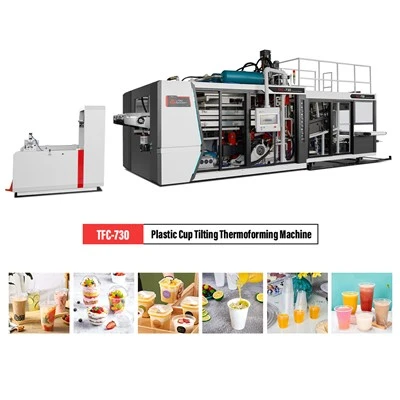
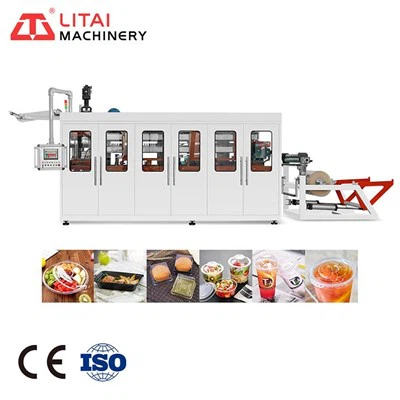
As an indispensable equipment in modern industrial production, the stability of Plastic thermoforming machines has a direct impact on product quality and efficiency. When heating anomalies, it is necessary to troubleshoot the system in order to locate the root cause quickly. Based on more than ten years of industry experience and typical fault cases, the troubleshooting steps and solutions of heating system anomalies are described in detail.
Typical Manifestations of Heating Anomalies
Heating system malfunctions generally manifest themselves as the following:
- Temperature fluctuation out of control Uncontrolled temperature fluctuations): actual temperature deviations greater than + -10°C or exhibiting continuous jumpings
- Decreased heating efficiency: Heating time increases by over 30% or falls short of process requirements;
- Localized overheating: Burning point or discoloration on heating element surfaces
- No heat at all: Temperature display remain at ambient temperatures
- Abnormal alarms: Control system often trigger alarms such as "heating circuit failure" or "thermocouple disconnection."
Three-Stage Troubleshooting Methodology
Phase 1: basic Inspections and Parameter Verification
1.Power system testing
Measure the current of the actual heating circuit using calipers and compare with the rating
Check for tripped circuit breakers, exploding fuses and burned-out contact points
Case study: a packaging enterprise by tightening loose power cord to solve the problem of insufficient heating energy supply
2.Control system calibration
Verify the setting of Verify temperature controller parameter settings, including PID values and temperature limits
Testing the stability of analog output signals (4-20mA or 0-10V)
Special case: AC heating segment malfunction of A thermoforming machine due to PLC programming error
3.Sensor status confirmed
Verify thermocouple/RTD types match process requirements (e.g., K-type, J-type)
Measurement of cold junction compensation resistance (typically 100Ω ±0.1%)
Innovations: Cross validation with infrared thermometer readings
Stage 2: In-depth heating element Inspections
1.Resistance heating coil test
Measurement of DC resistance of heating coils during power outage and comparison with nominal value (error <5%)
Check insulation resistance (≥ 2MΩ to avoid leakage risks.
Typical malfunction: A blown heating coil in extruders catch fire due to barrel corrosion
2.Electromagnetic induction heating diagnostics
Test resonant capacitor capacitance (error <10%)
Measurement of IGBT module drive voltage waveforms (normal should be 15V ±1V square waves)
Case study: 40% of heating power fluctuations were resolved by replacing a failed drive board capacitor
3.Infrared heating tube evaluation
Measurement of radiation efficiency by integral spherical photometer
Check if the reflective housing coating is falling off (affects >30% heat efficiency)
Special Solution: A medical device manufacturer has replaced heating uniformity with a high-emissivity coatings.
Phase 3: System Integration Diagnosis
1.Temperature uniformity test
Place Arrange 9-point temperature measurement grid measuring grid on heating plate (center + 4 corners + 4 mediumedges)
Record temperature rise curve for 30 minutes and calculate standard deviation (should be less than2°C)
Improvement case: A packaging enterprise reduced temperature variation from 8°C to 1.5°C by adding turbulence plates
2.Cooling system linkage check
Cooling water flow rate was measured (should ≥ 90%).
Verify the opening of the Verify temperature control valve opening according to actual water temperature.
Typical problem: A manufacturer of car interiors parts has experienced a short circuit in a heater caused by the reflux of cooling water.
3.Mechanical structural impact assessment
Check gap between heating plate and die (should be 0.5-1mm)
Measurement of thermal expansion compensation (allowable deviation ≤0.2mm / meter length)
Innovative solution: An electronics components manufacturer has solved metal thermal deformation issues with graphite gaskets
Common Fault Solutions Library
1. Persistently low temperature
Potential causes:
Insufficient heating power (low supply voltage, poor contact)
Excessive heat loss (damaged insulation, low ambient temperature)
Low gain of control system
Solutions:
Power line upgrade (raise copper core cross section by one notch)
silicon aluminum fiber cotton (density ≥128kg/m3)
Adjusted PID parameters (P value increased by 20%, I time shortened by 30%)
2. Severe temperature overshoot
Potential causes:
Sensor response lag (excessive thermocouple sheath length)
High actuator inertia (solid-state relay switching delay)
Environmental disturbance (strong electromagnetic field)
Solutions:
Switch to thin-film thermocouples (response time <0.1s)
Add relay output filtering circuits (RC time constant 0.01s)
Shield control cables (using twisted pairs + metal conduits)
3. Local overheating and burnout
Potential causes:
Uneven distribution of heating elements (power density difference >30%)
Clogged cooling channels (scale thickness >0.5mm)
Abnormal material thermal conductivity (local heat accumulation of recycled materials)
Solutions:
Redesign of heating district layout (implementation of area control)
chemical cleaning (5% citric acid solution circulation for 2 hours)
Increase temperature monitoring points (2 per 200 mm)
INTRODUCTION Construction of preventive maintenance system
1.Establish health records for heating system.
Record each fault phenomenon, solution, and replacement component
Generate temperature-time trend maps (moving average method recommended)
2.Implementation of periodic inspection plans
DAY: Verify temperature display meets process card requirements
Weekly: Measuring insulation resistance of heating circuit
Monthly: conduct heating efficiency test (standard enthalpy rise method)
Quarterly: Removal and inspection of oxidation of heating elements
3.Life cycle management of critical components
Resistance heating coils: ≤8,000 cumulative working hours
Thermocouples: Compulsory replacement every 2 years (even if not damaged)
Solid-state relays: Load testing per year (replaced when capacity decreases by 15%)
Intelligent Diagnostic Technology Applications.
Machine learning prediction models
Neural network training with historical fault data
fault type identification accuracy was greater than 92%.
Case study: One enterprise reduced unplanned downtime by 65% by deploying AI diagnostics
Digital Twins
Create a virtual model of a heating systems
Compare real-time parameters with simulation results
Predict component failure risk 48 hours in advance
Augmented reality (AR) Auxiliary Maintenance
Cover the interior of the device with AR glass
Displays key component replacement procedures and torque values
Increased maintenance efficiency by over 40%
Conclusion:
Troubleshooting the Troubleshooting heating systems of plastic thermoforming machines requires a combination of multidisciplinary knowledge of electrical control, thermodynamics and materials science. The reliability of the equipment can be significantly improved by establishing systematic troubleshooting processes, constructing preventive maintenance system and applying intelligent diagnosis technology. It is recommended that businesses spend at least 3 per cent of their equipment value on heating system upgrades each year, while cultivating interdisciplinary maintenance teams to meet increasingly complex industrial equipment management challenges.