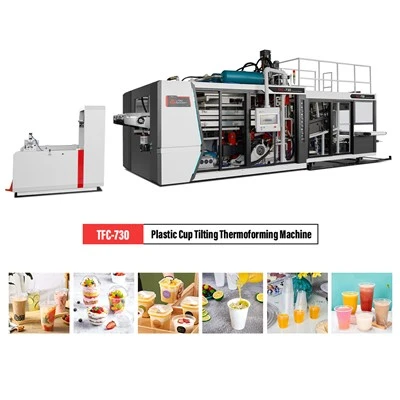
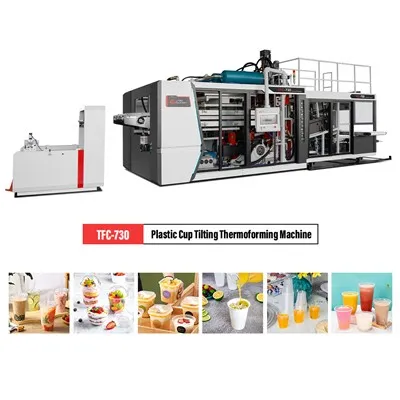
As the core technology polymer material processing processing, Plastic thermoforming is widely applied in automobile interior, packaging containers and electronic shell. However, the problem of uneven thickness of finished products has long bedeviled production efficiency and product quality. The reasons for this problem include raw material performance, equipment precision, process parameters and mold design. Combining with industry practice and cutting-edge technology, this paper systematically analyzes the root causes of wall thickness imbalance and puts forward stage solutions.
1. Typical Manifestations and Impacts of Uneven Thickness
1.1 Transverse Thickness Variation
The product displays thicker centers and thinner edges along the width direction, which is common in differential pressure forming processes. For example, in the manufacture of automotive interior components, the edges are 0.3mm thinner than the centre, resulting in assembly gap non-conformance.
1.2 Longitudinal Thickness Fluctuation
Periodically thickness will change in the direction of extrusion. In packaging box production, longitudinal thickness fluctuations to ±0.2mm, resulting in seal failure.
1.3 Localized Thickness Anomalies
Specific areas show sudden changes in thickness, such as overly thin corners or thickened rib sections. In electronic shell production, corner thickness is measured at 0.8mm (design requirement: 1.2mm) and impact resistance is reduced by 40%.
2. In-Depth Analysis of Core Causes
2.1 Raw Material System Factors
2.1.1 Melt Flow Rate Variability
Batch-to-batch variations (MFR) of more than 15% in melt flow results in inconsistent molten filling speeds. For example, ABS with a moisture content greater than0.1% may form gas voids during vaporization, resulting in insufficient local thickness.
2.1.2 ContaminationI
mpurities (such as metal fragments and carbonized particles) that are not filtered through an 80-mesh screen can block the flow of molds, disrupting melt flow interruptions. One business experienced periodic thickness defects due to 0.5mmdiameter PVC particles in raw material.
2.2 Equipment Precision Deficiencies
2.2.1 Die System Imbalance
Full-width die gap deviation >0.05mm result in an 8% difference in melt yield. Laser thickness gauge measurements revealed that the die center has a gap of 0.08mm compared to the edge, which leads to a direct increase of 0.25mm in the die center thickness.
2.2.2 Traction System Instability
Traction speed fluctuations >±0.5m/min had a significant effect on longitudinal thickness uniformity. Wear traction roller bearings resulted in ±1.2m/min velocity variation and a standard deviation in thickness from 0.05mm to 0.18mm.
2.2.3 Cooling System Inhomogeneity
Cooling rollers with a surface roughness of Ra >0.8μm reduced local contact area by 30%, resulting in shrinkage differences. The thickness range of the Zoned temperature-controlled cooling rollers (temperature difference <2°C) was reduced from 0.4mm to 0.12mm.
2.3 Process Parameter Deviations
2.3.1 Temperature Gradient Imbalance
temperature uniformity the die head <95% results in a 20% difference in melt viscosity. Infrared thermometry revealed a temperature deviations of 15°C, resulting in a 0.3mm thickness fluctuations.
2.3.2 Stretching Rate Mismatch
Thin sheets (<2mm) need to be stretched 30% faster than thick sheets (>5mm) to prevent thickness variations due to premature cooling. Stretching speed increased from 15m/min to 22m/min, increasing thickness uniformity by 25%.
2.4 Mold Design Flaws
2.4.1 Improper Flow Channel Design
The flow channels withthick center andthin edge results in insufficient supply of edge material in the filling stages stage. Adding a flow restrictors increased pressure distribution uniformity by 40% and reduced thickness range by 0.2mm.
2.4.2 Vacuum Hole Layout Issues
Vacuum hole spacing >150mm reduces suction force by 50%, resulting in local thickness deviations. Optimized hole layouts reduced thickness standard0.15mm to 0.08mm.
3. Systematic Solutions
3.1 Raw Material Preprocessing Stage
3.1.1 Strict Batch Management
MFR databases was established, requiring variations of less than10% and water content of less than 0.05% per batch of MFR. Implementation of a raw material traceability systems, resulting in 60% cent reduction in thickness non-conformance complaints.
3.1.2 Multi-Stage Filtration System
Filters combining 100 and 200 orders capture 99.9% >0.05mm of particles. This reduced surface defect rate from 8% to 0.5%.
3.2 Equipment Optimization Stage
3.1.1 Precision Die Calibration
Calibration of the die lip gap at a distance of 50 mm using a tentacle gauge and real-time feedback using a laser thickness gauge (±0.01mm accuracy). This controlled gap deviations is within ±0.03 mmWave.
3.1.2 Traction System Upgrade
Install speed linkage controllers maintain synchronization error of <±0.2m/min between extrusion and traction speeds. This reduces This reduced longitudinal thickness fluctuations by 0.1mm.
3.1.3 Cooling System Transformation
Spiral cooling water channels with flow regulators maintain regional temperature differences of less than 1 ° C. This shortened cooling time by 20% and improves thickness uniformity by 30%.
3.3 Process Control Stage
3.3.1 Temperature Gradient Optimization
Overview of the implementation of District 3 heating:
Tube area: 180-220°C (5°C/zone gradient)
Die head region: 200-210°C (2°C/zone gradient)
Model lip zones: 205-208°C (1°C/zone gradient)
This increased melt temperature uniformity by 25%.
3.3.2 Stretching Rate Matching
Establish stretching speed databases based on sheet thickness:
| Sheet Thickness (mm) | Stretching Speed (m/min) |
|---|---|
| <2 | 25-30 |
| 2-5 | 20-25 |
| >5 | 15-20 |
| This improved thickness uniformity by 40%. |
3.4 Mold Improvement Stage
3.4.1 Flow Channel
CFD simulation-optimized flow channels to achieve a <5% melt filling time. This reduces thickness range by 0.15mm.
3.4.2 Vacuum System Optimization
vacuum hole diameter reduced from 3mm for special structures to 2mm for special structures, spacing reduced from 200mm to 100mm, and vacuum increased by 30%. Surface flatness increased by 50%.
4. Intelligent Monitoring and Prevention Systems
4.1 Online Inspection Systems
Laser thickness gauges (500Hz sampling) and infrared thermometers were deployed for real-time thickness and temperature monitoring. This made possible the thickness variation warning, reducing defect rates from 2 per cent to 0.3 per cent.
4.2 Digital Twin Technology
The digital model of equipment-process-die is established by AI algorithm to predict thickness variations. This reduces process adjustment time by 70% and improves thickness uniformity by 35%.
4.3 Preventive Maintenance Systems
Implement equipment maintenance schedules:
Die alignment: once a week.
Traction system inspection: Monthly
Cooling system cleaning: Quarterly
This reduces device failure by 65% and improves thickness stability by 40%.
5. Typical Case Studies
5.1 Automotive Interior Component Thickness Optimization
An enterprise produces a instrument panel skeleton with a surface 0.4mm thinner than the center. Solutions included:
Installing precision die design ±0.02mm uniform lip gap
Increase traction speed from 18m/min to 25m/min
Optimize cooling to reduce edge center cooling time difference from 8 seconds to 2 seconds
Thickness decreased from 0.4mm to 0.1mm and qualification rates increased from 78 per cent to 96 per cent.
5.2 Packaging Box Longitudinal Thickness Control
food packaging boxes produced by an enterprise face ±0.3mm longitudinal thickness fluctuations. Solutions included:
Implementation of screw speed-traction speed linkage control (<±0.1r/min error)
Use zoned temperature-controlled dies (<1°C difference)
Optimization of melt flow channels with filling time difference of less than 3%;
This reduced the standard deviation of thickness from 0.15mm to 0.05mm, while increasing productivity by 25%.
6. Future Technology Trends
6.1 Nanoscale Thickness Control
Piezoelectric ceramic-driven die lip gap adjustment with ± 0.001mm precision meets the requirements of 5G communication equipment housing.
6.2 Adaptive Process Systems
Integrated machine vision and deep learning algorithms can identify defects in real time and automatically process parameter adjustments, reducing response time from minutes to seconds.
6.3 Green Manufacturing Technologies
thickness control and carbon reduction targets can be achieved by combining Low-temperature forming processes (20-30°C temperature reduction) with bio-based materials.
Conclusion
To solve the problem of uneven thickness in plastic thermoforming, a quality control system covering raw materials, equipment, process, mold and inspection is needed. Implementation of precision calibration, intelligent control, preventive maintenance, thickness control within ±0.1mm, meet strict high-end manufacturing requirements.