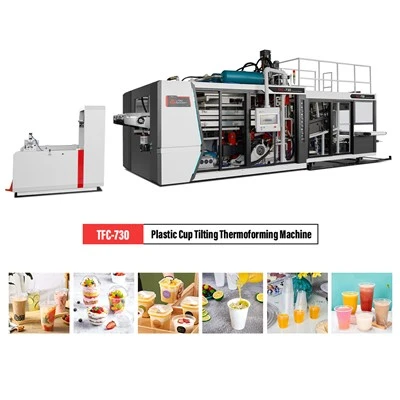
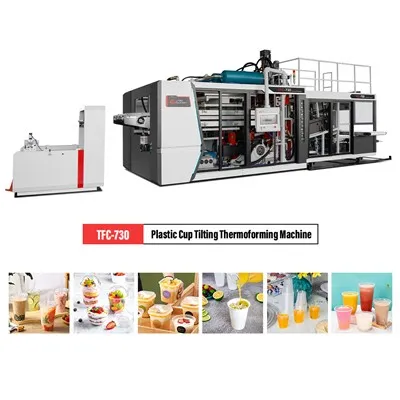
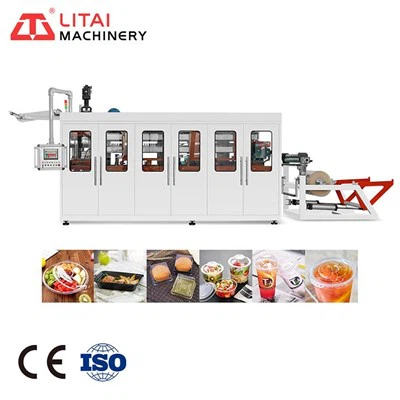
Plastic thermoforming technology is widely used in packaging, home appliances, electronics, medical treatment and other fields for its high efficiency, flexibility and high cost performance. Mold design and equipment selection as core components of thermal the thermoforming process directly affect product quality, production efficiency and cost control. In this paper, the key points of plastic thermoforming machines mold design and model selection are systematically expounded from four aspects: die mold design principles, equipment selection parameters, production scale compatibility and material performance matching.
Core Principles principles of Mold Design
1.Structural Rationality: from detail to overall structure
The mold structure must balance the fluidity of plastic with the ease of mold mold release. For example, medical tray molds utilize a larger corner radius (R ≥ 5mm) to reduce stress concentration in deep concave areas and prevent cracking after molding. In addition, the draft angle of 3°-5° ensures uniformity and smooth demolding of the plastic. In addition, dead-angle design can reduce residual stress and improve product surface quality.
2.Material Compatibility: balancing cost and Lifespan
Mold material selection must be based on the scale of production and complexity of the product. Aluminum alloy molds (such as T6-treated aluminum) are high temperature resistance (≥200°C), high excellent thermal conductivity, and long lifespan (more than 100,000 cycles) for mass production. Resin molds, on the other hand, are cheaper (only a third of aluminum molds), have faster lead times (3-5 days), but have a shorter service life (several hundred cycles), making them more suitable for small batches or early verification. One company, for example, quickly demonstrated product feasibility of using resin molds to reduce the nonconformity rate from 15 per cent to 5 per cent and unit costs by 15% per cent before transitioning to aluminum production.
3.Cooling System Optimization: Balance of Efficiency and Strength
Cooling channel must be designed to balance mold strength and cooling efficiency. For deep-cavity molds, optimizing the layout of cooling water channel layout,such as spiral cooling channels, can reduce cooling time by 30% and improve production efficiency. In addition, avoid close proximity to cooling channels and cavities (≥ 8mm is recommended) to prevent mold strength decline.
4.Surface Treatment and Venting Design: balance of function and aesthetics
Mirror molds are suitable for highly transparent packaging with a surface roughness of Ra ≤ 0.2μm (e.g. food boxes). Matte molds are fingerprinted and suitable for electronic product casings. Ventilators must be arranged in such a way as to ensure the release of air and prevent the creation of air bubbles and voids. For example, PE plates between 0.3 and0.8mm thick require vents between 0.4 and0.5mm in diameter and spaced between 30 and40mm.
Core Principles principles of Mold Design
1. Batch Cycle Matching: Differentiated Selections between Mass Production and Pilot Production
In mass production, durable aluminum molds should be selected to spread mold costs. For small batch or pilot production, resin molds can be used to reduce initial investment. For example, a startup uses resin molds to create samples that are proofread in three days, speeding up customer decisions.
2. Product Complexity: Coordinated Design of Structure and Mechanism
Complex structures (such as reverse locking and side pull) require split-die designs or auxiliary inserts (such as sliders and hoists) to avoid mold complexity. For example, a home appliance company used a slider mechanism to create an inverted sidewall of an air conditioner shell. This increases mold costs by 20% but production efficiency by 40%.
3. Cost-benefit analysis: long-term versus long-term Short-Term Trade-Offs
Resin molds have a lower cost per mold (approximately 500 yuan/molding) but a shorter service life; aluminum molds have a higher cost per mold (about $5,000 permold) but significant long-term benefits. For example, after successfully testing resin mold, one company switched to aluminum molds. Production of 50,000 units per year has reduced the mold cost ratio from 18% to 9%.
Selection of equipment based on Production Requirements
1. Core Parameter Matching: Precisely Adapting
Size and depth of molding: The maximum molding area and depth of the equipment are selected according to product size. For example, a bathtub requires a dedicated large-scale thermoforming machine (molding area ≥ 2 m2), while a small lunch boxes can be produced using general purpose equipment (molding area 0.5-1 m2). Sheet Thickness and cycle time: Roll-fed thermoforming machines is suitable for sheet with thickness of 0.3-5.0 mm, fast cycle time (10-15 seconds / piece) and high efficiency. Single station shuttles are suitable for thicker plates (5-10mm) but less efficient (30-40 sec / piece).
Clamping and injection: Clamping must be greater than expansion force (projection area x mold pressure) and injection volume must be 1.35 times the weight of the finished product. For example, machines with a clamping force of 250 tons or more should be selected for the production of ABS casings with a projection area of 400 cm2.
2. Process Parameter Verification: Precise Temperature and Vacuum Control
Temperature control range: Different materials require to match the equipment's temperature control accuracy. For example, PVC has an optimal molding temperature of 120-130°C and equipment must support + -5°C fluctuations; PC has an optimal molding temperature of 180-200°C and equipment must support a ±3°C fluctuation.
Vacuum System Efficiency: The diameter and layout of the exhaust holes shall be adjusted according to the thickness of the plate. For example, PE plates 0.3 to0.8mm thick require vents of 0.4 to0.5mm in diameter spaced 30 to40mm apart; ABS plates 1.0 to2.0mm thick require vents of 0.6 to0.8mm in diameter spaced 20 to30mm apart.
INTRODUCTION Equipment Selection at different Production Scale
1. Small-volume production (<10,000 Pg/year): balance of flexibility and cost
Type of equipment: General-purpose thermoforming machine (such as single station shuttle), support for rapid mold changeovers, low cost (approximately 100,000-200,000 RMB).
Mold Selection: Resin molds can reduce unit costs by 60%, but have a service life of only a few hundred cycles.
Case study: A startup uses resin molds to produce samples, complete proofing in three days and speed up customer decisions. Medium volume production (10,000 -100,000 units/year): Synergistic Improvements in efficiency and cost
Type of equipment: Four-station rotary thermoforming machine with combined heating, forming, and cooling functions, with a 40% efficiency improvement (reduced cycle time to 15-20 seconds/piece).
Mold Selection: Aluminum molds with a service life of more than 10,000 cycles, amortized unit cost can be reduced by 25%.
Case study: one home appliance company uses aluminum molds to produce air conditioner casings with an annual output of 50,000 units, and the cost of molds fell from 18% to 9%.
3. Mass production (>100,000 pieces peryear): combination of high-speed losslessness and high accuracy
Type of equipment: Sheet-fed thermoforming machine, support continuous production, production efficiency up to 800 pieces perhour.
Mold Selection: High precision aluminum die with integrated customization features such as anti-slip texture and flow guide.
Case study: a food packaging company uses a high-speed production line to produce 200 million lunch boxes a year, with a mold lifespan of more than three years and a 40% reduction in overall costs.
Equipment selection based on product materials and characteristics
1. General-Purpose Plastics (PE, PP): Economic Options for Medium and Low Temperature Molding
Equipment Requirements: low to mediumtemperature molding (80-120°C), general equipment can be satisfied.
Mold Design: simple cavity, vent diameter 0.5-0.8mm.
Case study: A necessities company used GM equipment to produce PPE storage boxes, reducing molding cycle time to 12 seconds.
2. Engineering Plastics (ABS, PC): Precise control of high temperature and high clamping force
Equipment Requirements: High temperature molding (150 -200 ℃), high clamping force for support (≥300 tons) and precise temperature control (±3°C).
Mold Design: Composite cavity, vent diameter 0.3-0.5mm, sandblasted surface (Ra ≤ 0.8μm).
Case study: An electronics company that produces notebook cases used high-precision equipment to control shrinkage to ±0.2%, resulting in a 99%% yield. Special materials (PVC, PS): Special Requirements Corrosion Resistance and High Vacuum
Equipment Requirements: Antiseptic treatment (e.g., stainless steel heating plate), vacuum support ≥90%.
Mold Design: Punch shrinkage 0.1-0.5%, die shrinkage 0.5-0.9%, edge sealing.
Case study: A pharmaceutical company that makes PVC infusion bags a sealing clamping device fixtures to reduce leakage to below 0.1%.
Conclusion:
Mold design and equipment selection of plastic thermoforming machines need to take into account reasonable structure, material compatibility, production scale, material properties and so on. Through scientific design principles and accurate equipment matching, enterprises can achieve the multiple objectives of improving product quality, optimizing production efficiency and controlling costs. In the future, with the development of materials science and intelligent manufacturing technology, thermoforming processes will develop in a more accurate and efficient direction, creating more value for the industry.