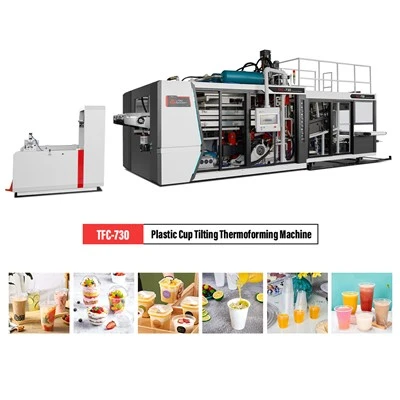
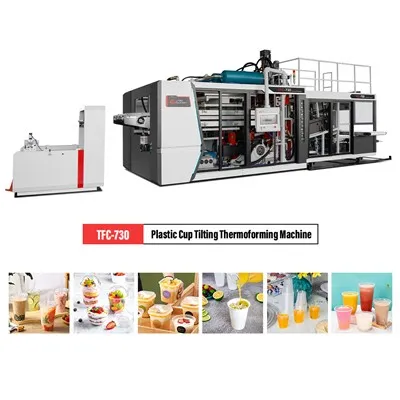
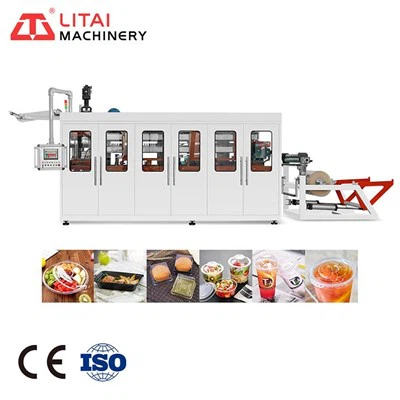
In plastic thermoforming processes, vacuum systems as core auxiliary equipment directly influences product quality, production efficiency and material utilization through precise control of gas environment. From food packaging trays to car interiors, medical consumables to electronic device housings, the performance of vacuum systems determines the feasibility and economic feasibility of thermoforming processes. This paper systematically analyzes the key role of vacuum systems in plastic thermal molding from four aspects: process principle, system composition, technological breakthrough and industrial application.
1.Process Principle of Vacuum Systems: Pressure Differentials Driven Precision Molding
The core of plastic thermoforming is heating thermoplastic sheets to soften it and then using pressure differentials to make it conform to the requirements of the mold cavities. Vacuum systems achieve this through the following mechanisms:
1.1 Gas Removal and Pressure Differential Establishment
When heated and softened plastic sheets cover the mold, the vacuum pump is activated, reducing the pressure in the mold cavity to less than -0.085 MPa (absolute pressure is approximately 15 kPa) inside 0.5 to 2 seconds. This creates a pressure differential of over 86 kPa between the external atmospheric pressure (approximately 101 kPa) and cavity pressure, driving the sheet to conform to the mold at a rate of 0.5 to 2 m/s. This pressure differential is the driving force of male molding, female molding and composite molding. For example, when producing a instrument panel frame for a car, the vacuum system must drain the mold cavity in 3 seconds to ensure the ABS plate conforms the requirements of a complex surface before cooling.
1.2 Material Elongation and Wall Thickness Control
During vacuum adsorption process, the plate is subjected to bidirectional tension: transverse compression of atmospheric pressure and longitudinal stretching of mold cavity constraints. The elongation of the material can be controlled by adjusting vacuum levels and heating temperatures. For example, in the production of 0.3mm thick PET food trays, a phased vacuum process is used: the initial vacuum is -0.06 MPa, allowing the thin plate to slowly align with mold bottom, and once the bottom is fixed, the vacuum is increased to -0.09 MPa to ensure uniform thinning of the side wall to 0.15 mm. This dynamic pressure control technique reduces the variation of wall thickness variation from ±30% to ± ±10%.
1.3 Foaming and Density Enhancement
The vacuum system quickly drains air (up to 50 cubic meters perhour) between the plate and the mold, reducing bubbles inside the product. When optical-grade PMMA light guide plates are produced, a vacuum level more than -0.098 MPa, combined with a preheating of the die to 80°C, reduces material melt viscosity, accelerates the increase of bubbles by three times, and increases the light transmittance of the product from 85% to 92%.
Technological Composition of Vacuum Systems: evolution from Standalone Units to Centralized Integration
Modern thermoforming machine vacuum systems has been developed into a modular, intelligent integrated system with core components including:
2.1 Vacuum Pump Units
Oil-sealed rotary vacuum pump: Single pump speed up to 200 m3/h with a limit vacuum levels -0.099 MPa, suitable for forming thick plates (>3mm), subject to periodic change of lubricating oil and risk of oil mist contamination.
Dry Screw Pumps: oil free design, pumping speeds stable at 150 m3/h, limit vacuum of -0.095 MPa, maintenance intervals up to 8000 hours, widely used in food packaging.
Centralized Vacuum Systems: multiple thermoforming machines connected through pipelines and equipped with invertercontrolled vacuum pump units (total power 50–200 kW) for energy distribution on demand. For example, the introduction of a vacuum system system in a car interior component factory reduced energy consumption by 40% and equipment footprint by 60 per cent.
2.2 Air Storage Tanks and Buffer Devices
Gas storage tanks are typically 1.5 to 2 times the volume of the molding chamber and have a variety of functions:
Balance pressure fluctuations of intermittent vacuum pump operation and stabilize vacuum in ±0.002 MPa range.
Storage of vacuum energy to shorten evacuation times. For example, in the production of high-impact polystyrene sheets 0.5 mm thick, two cubic metres of air storage reduced evacuation time from 2.8 seconds to 1.5 seconds.
2.3 Intelligent Control Modules
PLC + Touchscreen Systems: More than 20 process parameter groups can be pre-set and vacuum, temperature and pressure curves can be monitored in real time. For example, in the production of medical dialysis device casings, the system automatically adjusts vacuum levels from -0.06 MPa (pre-molding) to -0.09 MPa (final forming), ensuring size accuracy within ±0.05 mm.
IoT integration: Sensor networks collect data on vacuum pump vibration and temperature, and AI algorithms predicting equipment failures. An component packaging plant has reduced the downtime of equipment by 75% after adopting the technology.
Industrial Applications of Vacuum Systems: from traditional packaging to high-end manufacturing
The improvement of vacuum system performance is driving the development of thermoforming processes towards higher accuracy and added value:
3.1 Food Packaging
When producing biodegradable PLA lunch boxes, vacuum systems must meet the following requirements:
- Vacuum ≥ ≥ -0.09 MPa ensures that 0.2 mm thin-walled products are defect-free forming.
- Evacuation times ≤1.2 seconds to accommodate high-speed production lines (40 weeks/min).
- 1 by optimizing the layout of vacuum pipeline, reducing scrap rates from 8 percent to 2 percent, saving more than 2 million yuan a year in raw material costs.
3.2 Automotive Industry
In the production of battery housings for new energy vehicles, vacuum systems must:
- A maximum vacuum levels of 0.099 MPa, coupled with a die temperature controller that heats PC/ABS alloy plates to 220°C, ensures a product impact resistance 40 kJ/m2.
- Evacuations were synchronized with robotic arm to install inserts, reducing production cycle from 120 to 60 seconds perpiece.
3.3 Medical Consumables
When producing a disposable blood dialyzer housings, vacuum systems must meet the following requirements:
- Vacuum was stabilized at -0.095 ± 0.001 MPa to ensure stress ≤3 MPa in a PC plate 0.15 mm thick and prevent cracking during use.
- HEPA filtration maintained cavity particle at cleanliness standards level 10 (≤10 particles/m3 for particles ≥0.1 µM).
4. Technological Challenges and Development Trends
Despite significant progress, vacuum systems still face challenges:
- Thick Sheet forming limit: Current system does not have enough evacuation efficiency for thin plate more than 10 mm thick, so it is necessary to develop high-pressure water jet-assisted vacuum forming technologies.
- Composite Material Adaptability: Carbon fiber/thermoplastic prepreg forming requires a vacuum levels more than -0.1 MPa and solves the problem of vapour contamination by vacuum pumps resin.
- Energy Efficiency Optimization: While central systems reduce overall energy consumption, the efficiency of individual units still needs to be improved and the development of magnetic levitation centrifugal vacuum pumps and other novel equipment is required.
Future developments in vacuum system will focus on:
- Intelligent: the digital twin technology is used to simulate vacuum forming processes and realize closed-loop optimization of process parameters.
- Greening: adopt oil-free equipment such as water ring vacuum, integrate waste heat recovery system, reduce energy consumption by over 50%.
- Integration: Combining with 3D printing technology, a complex production line ofvacuum forming + additive manufacturing is developed to realize one-piece forming of complex structural components.
Conclusion:
From primitive manual evacuation devices to today's intelligent centralized vacuum systems, the development of vacuum technology has always focused on improving forming accuracy, efficiency and sustainability. With the transition from manufacturing to high-end applications, vacuum systems have become the core competitive advantage of thermoforming processes. Looking ahead, breakthroughs in materials science and control technologies will continue to drive more accurate, greener, and smarter plastic thermal molding in vacuum systems, providing critical support for global manufacturing upgrades.