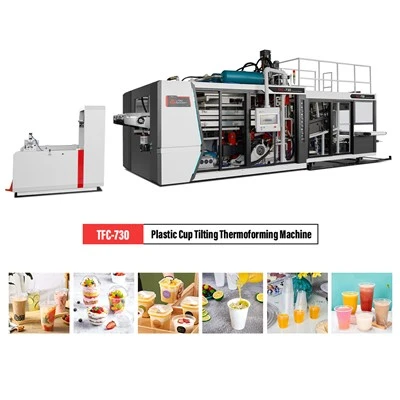
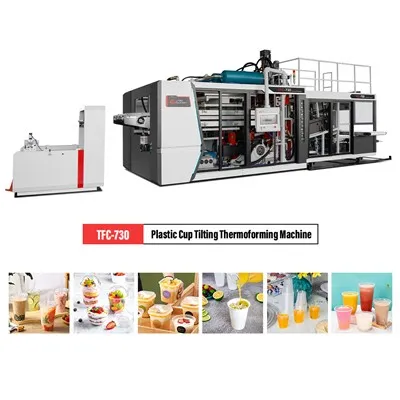
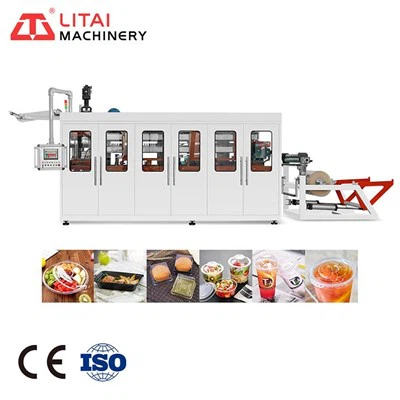
Plastic thermoforming is a manufacturing method that heats thermoplastic sheets until soft and flexible. These softened sheets are then shaped over a mold, cooled, and solidified into finished products. Industries like packaging, automotive, appliances, and construction widely use this process for creating essential manufactured items.
Part deformation remains a frequent problem in thermoforming. It harms both the product's appearance and functionality, while also lowering production efficiency and raising costs. Finding ways to operate thermoforming equipment correctly to avoid deformation is crucial for improving product quality and manufacturing output.
Preparation before operation of plastic thermoforming machine
Setting appropriate heating temperature and time based on plastic material properties
Different plastic materials have distinct melting points, thermal stability, and forming temperature ranges. For example, polyethylene (PE) has a low melting point and good thermal stability, making it suitable for forming at lower temperatures. Conversely, polycarbonate (PC) has a higher melting point and relatively poorer thermal stability, requiring higher forming temperatures and more precise temperature control.
To determine the optimal heating temperature and duration, we can conduct testing or consult material datasheets. Experimental methods typically involve small trial runs at various temperatures and times, observing the formed parts' quality and deformation to identify the best parameters. Additionally, reviewing plastic material technical guides and industry research provides crucial insights into thermal properties and forming characteristics.
Heating temperature and time significantly impact part deformation. If the temperature is too high or heating lasts too long, the plastic sheet may become overly soft, causing collapse or shrinkage deformation during forming. On the other hand, insufficient temperature or inadequate heating time prevents proper softening, compromising formability and potentially leading to cracking or difficulty releasing parts from the mold.
Key Controls in Plastic Thermoforming
Controlling Mold Clamping Pressure and Speed
Uneven clamping pressure or excessive forming speed significantly impacts part geometry. Inconsistent pressure can cause localized depressions or protrusions during forming, resulting in dimensional inaccuracies. Similarly, overly rapid forming may prevent the plastic sheet from fully filling the mold cavity, creating voids or warpage.
Adjusting clamping pressure and speed requires evaluating multiple factors: mold design, sheet thickness, and forming temperature. Complex or large parts generally need higher clamping pressure with slower forming speeds to ensure complete mold filling and dimensional stability.
Mold design critically influences pressure and speed control. Well-engineered molds distribute clamping pressure evenly while optimizing runner systems to reduce material flow resistance during forming-minimizing deformation risks.
Maintaining Uniform Sheet Tension During Heating and Forming
Uneven sheet tension directly contributes to part distortion. Irregular tension during heating can cause wrinkles or twisting during forming, compromising both appearance and dimensional accuracy.
To achieve consistent tension:
- Optimize the sheet feeding system for smooth material transport
- Calibrate heating zones for uniform thermal distribution
- Implement tension monitoring with real-time adjustment capabilities
Tension control methods include using sensors and vision systems for live monitoring, with automated adjustments to feed rates and heating parameters maintaining stability.
Post-Forming Cooling Control in Plastic Thermoforming
Precision Control of Cooling Rate and Method
Cooling rate and methodology critically impact part shrinkage and warpage. Excessively rapid cooling can create internal stress buildup, leading to part deformation or cracking. Conversely, overly slow cooling may cause differential shrinkage during solidification.
Selecting appropriate cooling parameters requires evaluating material thermal properties alongside part geometry and thickness. Parts with lower thermal stability or thicker cross-sections typically benefit from slower, more uniform cooling to minimize stress-related distortion.
Cooling System Design and Maintenance
Effective cooling demands properly engineered systems. Optimal channel design ensures uniform coolant distribution and maximizes heat transfer efficiency. Regular maintenance-including clearing blockages and sealing leaks-prevents compromised cooling performance that could otherwise cause dimensional inaccuracies.
Routine Maintenance and Inspection of Thermoforming Equipment
Maintaining Machine Stability to Prevent Part Deformation
Regular maintenance and inspection are critical for consistent thermoforming performance. Essential tasks like cleaning, lubrication, and fastener tightening reduce mechanical wear and prevent operational failures, ensuring reliable production output.
Key component care procedures:
- Heating elements: Monitor electrical resistance and replace degraded units
- Tooling: Inspect molds for wear and repair/replace damaged sections
- Drive systems: Verify proper lubrication and alignment
These protocols maintain component integrity, preventing deformation issues caused by equipment degradation.
Essential Calibration and Tuning
Periodic adjustment of temperature, pressure, and speed parameters maintains peak operating conditions. This calibration directly enhances part quality consistency and dimensional accuracy throughout production runs.
Conclusion
Effective operation of thermoforming equipment requires comprehensive strategies to prevent part deformation. By implementing these critical controls-optimizing heating parameters, regulating mold clamping dynamics, maintaining uniform sheet tension, managing cooling protocols, and performing systematic equipment maintenance-manufacturers can significantly reduce deformation risks while enhancing product quality and production efficiency.
Continuous skill development remains essential for operators. As thermoforming technology evolves, practitioners must proactively acquire new knowledge and techniques to address emerging industry challenges and market demands.
Looking ahead, thermoforming will advance toward greater efficiency, sustainability, and automation. Integrating intelligent control systems, refining process parameters, and adopting eco-friendly materials will further elevate equipment performance and output quality, strengthening thermoforming's role in modern manufacturing.