How to choose the right plastic thermostat: a practical guide
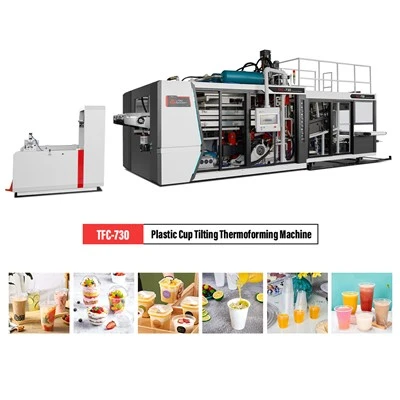
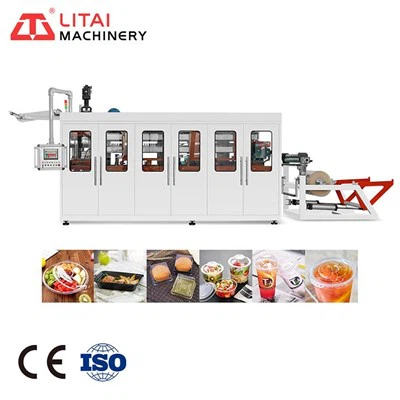
Plastic thermoforming is a flexible and economical method for manufacturing thin plastic products. These include disposable cups, food trays, blister packs and industrial parts. Compared with injection molding, it lower tooling costs mold, is newer and faster, and produces more. This is why it is widely used by packaging manufacturers around the world.
However, many factories still face inefficiencies, high waste rates and additional costs. These problems often stem from the wrong thermostat. Wrong machine choices can damage product quality and limit future production growth. This guide provides a simple, production-centric option. It uses peer-reviewed polymer studies and industry standards. It helps manufacturers choose the right machine based on production size, product type and material needs.
1.Define Your Core Production Requirements first
Good machine selection starts with understanding your own actual production needs. Don't just go for cheap or high-end features. Three main factors determine machine type and level of automation: volume, product shape and plastic materials.
Production sets the feeding system you need. Leaflet machines work best for small volume customizations of up to 250,000 units per year. They are easy to mold changes and have low startup cost costs (Utrecht University Industrial Equipment LCA Report Report 2025). For standard mass production of more than 250,000 units a year, such as regular cups and pans, rolling continuous machines are better. They can increase production by 30 – 50% higher output and reduce labor use.
The thickness and shape of the product determine the shaping pressure. Basic vacuum forming is suitable for simple flat plate products 3mm thick. But parts with deep, complex or high accuracy require positive andnegative pressure to form. This doublepressure method gives the material stretch evenly. It prevents common defects such as uneven walls, warping and incomplete shapes. This increased total production (Industrial Polymer Processing Research 2026).
Different plastics require different machine settings. Food-grade polypropylene and PET require zoning heating and matching cooling because they have specific softening and contracting properties. Recycled materials such as rPET and mixed regrind require stronger heating control and melt filters. This compensates for the uneven quality (ACS Sustainable Manufacturing Research).
2. Selection of Vacuum and Positive-Negative Pressure Forming
The results The two main thermoforming technologies are very different in terms of accuracy and cost. That makes it a critical choice.
Vacuum forming machines use only negative pressure. They are simple in design and cheap. They work in small batches for low accuracy, non-food and testing. However, the tensile effect of this material is not uniform. This leads to more waste and unstable sizing accuracy. Therefore, they cannot be used in food or medical packaging.
Positive andnegative pressure are formed using both pressures. This will keep the tension and shape of the plate stable. Industry data show that this approach improves product size consistency above 99%. It also reduces process scrap by over 10% compared to vacuum forming (Mechanical Engineering Industry Standard Research, 2026). It is the top choice of standard food grade plastic product line. Reliable quality and long term cost savings.
3. Match automation to the scale of your operation
Choosing the right level of automation balances first cost, labor, and future production growth.
Semi-automatic machines are suitable for small shops and small batch testing. They need to be hand-fed and picked. They cost less to buy but produce less per hour. They are not suitable for mass production.
Automatic paper feeder, flexible mold changes, quick installation. They offer the best value for medium-sized, multi-styled customisation work. They balance efficiency and cost well.
Full-automatic roll-fed servo machines operates 24 hours non-stop. They will be shaped, stamped, trimmed and stacked. Servo drives reduce idle energy waste in old hydraulic systems. This reduces total energy consumption by 35–55%. This setup is best suited to large, standard items such as disposable cups. It enables low-waste, high-yield continuous production (Academic Research in Low-Carbon Manufacturing, 2026).
4. Check Key Technical Parameters to ensure long-term stability
Just looking at prices and theoretical output can cause long-term damage. Core technical specifications determine the stability, output and maintenance cost of the whole machine.
Precision heating is the basis of stable product quality. Good modern machines use partitioned electromagnetic induction heating with PID closed-loop control. This keeps temperature change within + -1°C. Even heating can prevent uneven softening of bad batches. This is often the case with resistance heaters (ACS Sustainable Manufacturing Research, 2026).
Full servo positioning accuracy to maintain stable quality time. High-grade servo systems precisely control feed, close and cut. They keep product size the same over long run. Standard machines operate below 75 decibels. Too much noise means poor mechanical parts. This leads to faster wear and more breakdowns (Mechanical Engineering Industry Standard Research 2026).
Closed loop cooling keeps mold temperature stable. This will shorten cycle time and reduce warping and contraction. Good cooling improves actual production more than falsified high-cycle speed figures.
V. Evaluate Compliance, maintenance and total costs
Smart machines are chosen not only by price, but also by the total cost of life. Cheap old machines tend to waste more energy and often break down, causing material damage. This increases long-term operating costs.
Machines must follow strict rules for food and medical packaging. Parts that come into contact with the product must conform to hygiene standards. Feeding and heating areas must be sealed off to reduce contamination risk. Production data need to be comprehensively tracked to comply with global safety and market rules (Food Packaging Safety Compliance Journal 2025).
Modular designs, standard parts, easy to clean and maintain. This will reduce downtime. The whole idea of a complete lockdown is not good. They are difficult to repair and lead to prolonged shutdowns.
Built-in energy-saving features, such as insulation panels and closed-loop controls, reduce water and electricity use. For long-haul routes, the savings can pay for the extra cost of high-end machines in two to three years.
6. Avoid Selection Mistakes
Most purchasing errors come from unilateral choices. Choosing the cheapest machine can lead to old parts, erratic operation and high waste rates. On the other hand, buying too many machines for small custom orders can lead to low usage and waste of money.
Many manufacturers put too much faith in the speed of theoretical cycles. They forget that heating and cooling restrictions can drastically reduce actual production. In addition, neglecting the coordination of materials could hinder future production changes. Basic machines cannot handle recycled or altered plastic.
Frequently Asked Questions
Q1: What the best thermoforming machine for making plastic cups?
A1: For large mugs, full-automatic roll-fed positive-negative pressure servo machines is best. They provide low edge trim for wasteful and stable energy use. Small and medium sized manufacturers can choose from a single sheet of positive andnegative pressure model with trimmingin place. These are all cost-effective.
Question 2: Is a 2026 vacuum builder worth buying?
A2: Vacuum forming machines are only suitable for low precision, non-food, small batch products. For standard food packaging and high-quality plastic products, positive andnegative pressure machine has better long-term value. Higher yields and less waste.
Q3: What is the core hallmark of thermostat stability?
Answer 3: The three key indicators are ±1°C heating stability, high-precision servo repeatability and stable closed-loop cooling. Together, these determine yield rate and long-run production capacity.
Conclusion:
Choosing the right thermoforming machine depends on whether the machine type, automation level and features match your production size, product precision and material needs. Manufacturers should not base their decisions solely on price or specifications. They should focus on stable accuracy, energy conservation, ease of maintenance and compliance. A well-selected machine can increase production, cuts material and energy waste, and generate long-term profits for packaging lines.
Reference Sources
- ACS Sustainable Manufacturing Research. Energy Saving and Precision Control Technology for modern plastic thermoforming equipment 2026.
- Utrecht University Industrial Equipment LCA Report. Life cycle cost and efficiency assessment of sheet paper and coil thermostats 2025.
- Mechanical Engineering Industry Standard Research. Specification of operating parameters and stability testing standards for industrial thermoforming equipment, 2026.
- Journal of Food Packaging Safety Compliance Journal and compliance. food-grade plastic thermoforming production equipment Hygiene and traceability standards 2025.
- V. Low-Carbon Manufacturing Academic Research. Energy consumption optimization and environmental protection upgrade path of thermoforming production lines in 2026.