

As the core equipment for secondary molding of plastic products, Plastic thermoforming machines directly influences product quality, production efficiency and equipment lifespan. However, in actual production, frequent equipment failures can not only cause production interruptions, but also cause a series of losses, such as waste of raw materials and mold damage. Through the system cleaning and maintenance, it can effectively prevent hydraulic system pressure anomaly, electronic control signal distortion, heating temperature control fault, mechanical transmission wear and tear. In this paper, from the point of view of equipment structure and fault mechanisms, the central role of clean maintenance in fault prevention is analyzed.
Hydraulic System Fault Prevention: and Maintenance
Hydraulic system is the power core of a thermoforming machine. It is responsible for the key actions such as mold clamping, injection molding and ejection. The fault is usually characterized by insufficient pressure, sluggish motion and abnormal increase in oil temperature, of which hydraulic oil contamination is the main cause.
1.1 Chain Reactions of Hydraulic Oil Contamination
Hydraulic oil carries impurities such as metal debris, water and oxidation products in its circulation. For example, iron filings from wear and tear inside a hydraulic pump can accelerate the blockage of the relief valve spool and prevent pressure from being generated. Moisture in oil can reduce lubrication performance and cause cylinder seals age and cracking. Oxidized sludge can clog radiators, causing oil temperatures to rise abnormally. The case study shows that without regular replacement of hydraulic equipment, hydraulic pumps has a pump failure rate three times that of regular maintenance equipment and a 60% increase in maintenance costs.
1.2 Key points of cleaning and maintenance
Oil management: hydraulic oil filters are replaced every 500 hours and hydraulic oil is replaced every 2000 hours. Use magnetic filters to capture iron filings.
Radiator Maintenance: Compressed air is used annually to blow wash radiator fins to ensure efficient heat dissipation. After the measure was implemented, a factory lowered oil temperature anomaly alarm by 80%.
Seal inspection: cylinder seals should be inspected regularly and replace immediately to prevent the entry of external contaminants if there is aging or damage.
2. The Prevention of Fault in Electrical Control System: Combining Cleaning and Detection
Electronic control systems are the "brain" of a thermoforming machine and are responsible for precisely controlling parameters such as temperature, pressure and speed. The fault manifests itself in unresponsive programs, sensor misreports and actuator malfunctions, among which dust accumulation and line aging are the main causes.
2.1 Hazards of Dust Accumulation
Plastic dust floating in the production environment can penetrate electrical cabinets and attach to PLC modules, contactors and sensor surfaces. For example, dust accumulation on temperature sensors can lead to temperature measurement errors, causing heating elements to overheat and burn. Dust on the contact point of the contactor increases contact resistance, making it difficult for the motor to start. According to one company, 40% of electrical faults are related to dust accumulation.
2.2 Key points of cleaning and maintenance
2. Dust the cabinet: Vacuum the inside of the cabinet once a quarter, focusing on cleaning PLC modules, terminal blocks, transformers, etc.
Wiring Inspection: Check power cords, signal cables and grounding wires monthly and replace them immediately if they are damaged or aging. One plant reduced short-circuit failures by 75% through the measure.
Sensor Calibration: Thermocouples are calibrated every six months with standard thermometers to ensure temperature control within + -1°C.
3. Fault Prevention of Temperature Control System: Combination of Cleaning and Temperature Control
heating temperature control system ensures that the plastic melt reaches the optimum processing temperature by means of the combination of heating elements and temperature controllers. The fault is temperature deviations and uneven heating, mainly due to the aging thermocouples of heating elements.
3.1 Effects of Carbon Sediments Heating Elements
Plastic melt breaks down at high temperatures, producing carbonaceous substances sticks to the surface of heating elements to form insulation. This reduces heating efficiency, causing the temperature controller to increase in power and maintain a set temperature, eventually causing the heating element to burn out. The case study shows that without regular cleaning of heating equipment, the replacement period of heating element replacement could be shortened to 3 months, while the useful life of regular maintenance equipment can reach 12 months.
3.2 Key points of cleaning and maintenance
Heating element cleaning: The surface of heating elements is polished quarterly to remove carbon deposits and clean with alcohol.
Thermocouple Inspection: Check that loose thermocouple connections is loose once a month and calibrate with a standard thermometer every six months.
Temperature Controller Parameter Optimization: Adjust PID parameters according to plastic characteristics to avoid temperature overshoot or lag. For example, when processing PP material, the integral time can be set to 120 seconds and the derivative time can be set to 20 seconds.
4. Prevention of Mechanical Transmission System Fault: Combining Lubrication and Cleaning
Mechanical transmission system includes gearbox, ball screws, guide rail and other components. The fault is characterized by abnormal noise, sluggish movement and reduced accuracy, mainly due to insufficient lubrication and dust intrusion.
4.1 Hazards of Insufficient Lubrication
Gear meshing, bearing rotation and ball screw movement all require sufficient lubrication. If the lubrication is insufficient, it can lead to tooth surface wear, bearing rusting, increasing the ball screws and nut clearance. one company's equipment, for example, did not have regular guide rail lubrication and its mold parallelism deviation increase from 0.05 mm to 0.2 mm in six months, resulting in a 15% reduction in product qualification rate.
4.2 Cleaning and Maintenance Implementation elements
Lubrication management: check the central lubrication system oil level daily, replenish lubricating oil weekly and clean lubricating oil filter monthly.
Guide rail cleaning: Wipe the surface of the guide rail surface daily with a clean rag to remove plastic debris and oil stains and prevent accelerated wear and tear.
Bearing Inspection: use stethoscope once a month to detect abnormal bearing noises, find problems with the bearings immediately replace, re-injection of grease.
V. Full-cycle maintenance system development: from routine maintenance to annual maintenance
Clean maintenance should be integrated into the full cycle maintenance system to form a ``routine inspection-regular maintenance-preventive maintenance "of the closed-loop management.
5.1 Daily Inspection
a "five-sense + tool" inspection daily before turning on:
Visual inspection: check hydraulic fluid level, pipe joint leakage, heating element deformation, etc..
Hearing Inspection: check for abnormal noise in hydraulic pump, motor and gearbox.
Touch Inspection: Feel the surface temperature of motor housing, hydraulic tank and oil drum.
Olfactory Inspection: Check cabinets and heating area for the smell of burning.
Measurement and inspection: Record hydraulic pressure, barrel temperature and production cycle.
5.2 Periodic Maintenance
Short-term maintenance (500 hours): replace air filters, clean radiators, check guide grease.
Medium term maintenance (1000 hours): replace hydraulic oil filters, calibrate the thermocouple, check heating element terminals.
Long-term maintenance (2000 hours): replace hydraulic fluid, remove and clean directional control valve, check the ball screw nut preload.
5.3 Preventive Maintenance
The potential faults of bearing peeling and uneven heating were found in advance by vibration spectrum analysis and infrared thermal imaging. For example, one company avoided a major failure by using vibration monitoring to replace hydraulic pump bearings in the early stages of wear and tear.
Conclusion:
Cleaning and maintenance of plastic thermoforming machines is a comprehensive practice combining technology and management. Its core goal is to interrupt the chain of fault occurrence through the system maintenance measures. From regular hydraulic fluid changes to cabinet dust removal, from heating element cleaning to guide rail lubrication, every detail affects the steady operation of the equipment. Enterprises should establish the management concept of ``prevention first, maintenance second '', and incorporate clean maintenance into standard operating procedures, so as to reduce fault rates, prolong equipment lifespan and improve production efficiency.

Knowledge
May 15, 2026
Regular cleaning and maintenance of plastic thermoforming machines can effectively prevent which common malfunctions?
Previous
No InformationSend Inquiry
-

TQC-750 Plastic Cup Thermoforming Machine
Read More > -
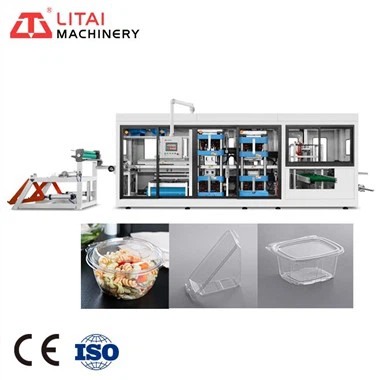
Three-Station Plastic Thermoforming Machine
Read More > -
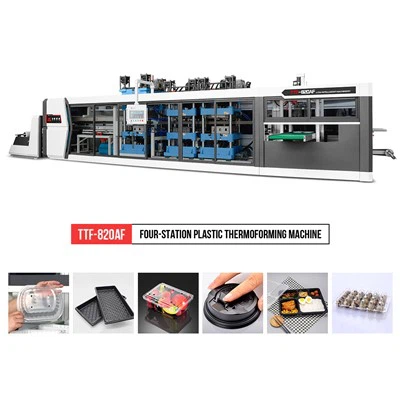
Fully Automatic Four-station Plastic Thermoforming Machine
Read More > -
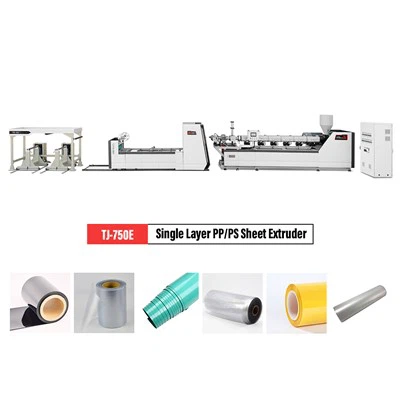
PP PS Sheet Machine
Read More >